







お客様のショッピングバッグに商品はありません。

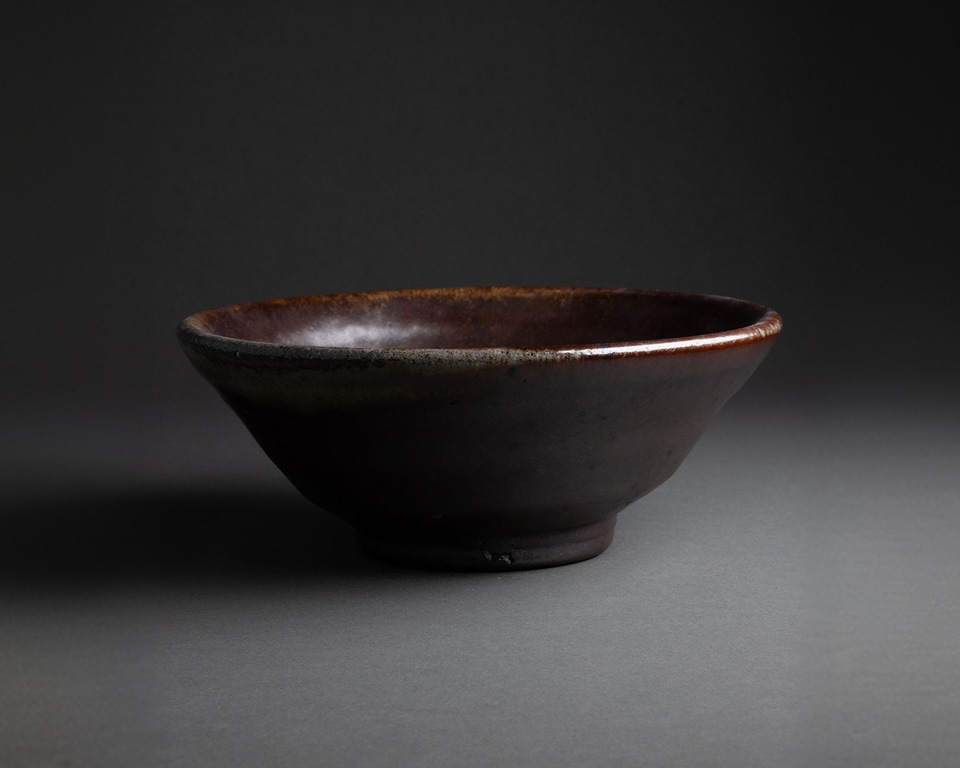
Designed to be held with both hands, the chawan is a tea bowl central to the traditional Japanese tea ceremony.
The everyday tea cup.
The Choko is a small cup used for drinking sake.
The Square Kaki is a small vessel or container.
The sake cup.
The Large Rounded Kaki is a vessel or container; in Ikebana, the kaki is not just an essential element of the artistic composition.
The Kayoi Tokkuri or Binbo Tokkuri is a form of sake bottle traditionally used for refilling, commuting, and storing sake.
Tetsuki Hanaire is a vase, often used for flowers, with a bridging handle.
Central to Chawan Cabinet is a group of ceramic artists whose practices reflect a deep engagement with tradition, experimentation, and material intelligence: Shion Tabata, Taira Kuroki, Yuichi Hirano, Koichi Ohara and Theaster Gates. Together, these five makers form a constellation of distinct yet interconnected approaches.
Yuichi Hirano is recognized as one of the earliest presenters of contemporary Japanese throwing methods. A legendary figure in Tokoname, he stands as a bridge between industry, artisanal practice, and conceptual making. His sprawling atelier along the historic pottery path immediately reveals a vision that connects past and future. Coming from a family that served as keepers of the Noborigama city kiln, his studio reflects the deep interconnectedness of Tokoname families and the generational evolution of the great climbing kiln. Hirano’s work uses the flame to build rich, nuanced surfaces. His vessels are quiet and never demand attention, yet they hold tremendous power. His work and legacy stand as a celebration of a long and influential life in ceramics.
Taira Kuroki represents a new generation of highly skilled functional makers. Working from his family atelier just outside Kyoto, he focuses primarily on service ware. By firing mainly in an electric kiln, he produces some of the most refined wares in the Kyoto region. For the Chawan Cabinet Project, he created a series of sake service vessels featuring an electric green reminiscent of the historic Oribe glaze. With a sensibility akin to that of a sophisticated porcelain master, Taira’s strength lies in both the lightness of his wares and the delicacy of his forms. His atelier embodies a perfect balance between usability and design sophistication.
Koichi Ohara is distinguished by his deeply experimental and interdisciplinary approach to ceramics. With a background in physics, he combines scientific rigor with a strong commitment to research and experimentation. Often working with unexpected materials such as crushed gravel, asphalt, glass, and stones sourced from the immediate surroundings of his studio, he constructs a unique ceramic vocabulary rooted in place. His making process is singular, unpredictable, and operates in a space close to alchemy. His presence within this project reflects a long-standing history of collaboration and shared inquiry spanning over two decades.
Shion Tabata is one of the newest voices within the cohort, with a practice grounded in the study and reinterpretation of tradition. Her work, centered on the concept of Utsushi, focuses on the recreation of historic masterworks as a form of homage to past masters. Through dedication to repetition and disciplined practice, she has developed a remarkable sensitivity to important regional traditions, including Iga, Karatsu, Bizen, and Oribe. Her approach highlights the importance of tradition and discipline as forms of respect, while also suggesting unexpected ways of moving tradition forward.
Theaster Gates is an artist whose practice finds roots in conceptual formalism, sculpture, space theory, land art, and performance. Trained as both a sculptor and an urban planner, through his work, Gates contends with the notion of Black space as a formal exercise, defined by collective desire, artistic agency, and the tactics of a pragmatist. Gates’ relationship with clay has been a focal point of his practice since studying pottery in Tokoname, Japan, in 2004. For Gates, clay is a metaphor for his ability to shape his world, extending the intelligence of the hand to the mind. Recent vessels extend Gates’s celebration of clay and craft, linking conceptual practices to physical making.

国または地域を変更しますか?
から Prada.com を訪問しています。ローカライゼーションを更新しますか?
国または地域を選択